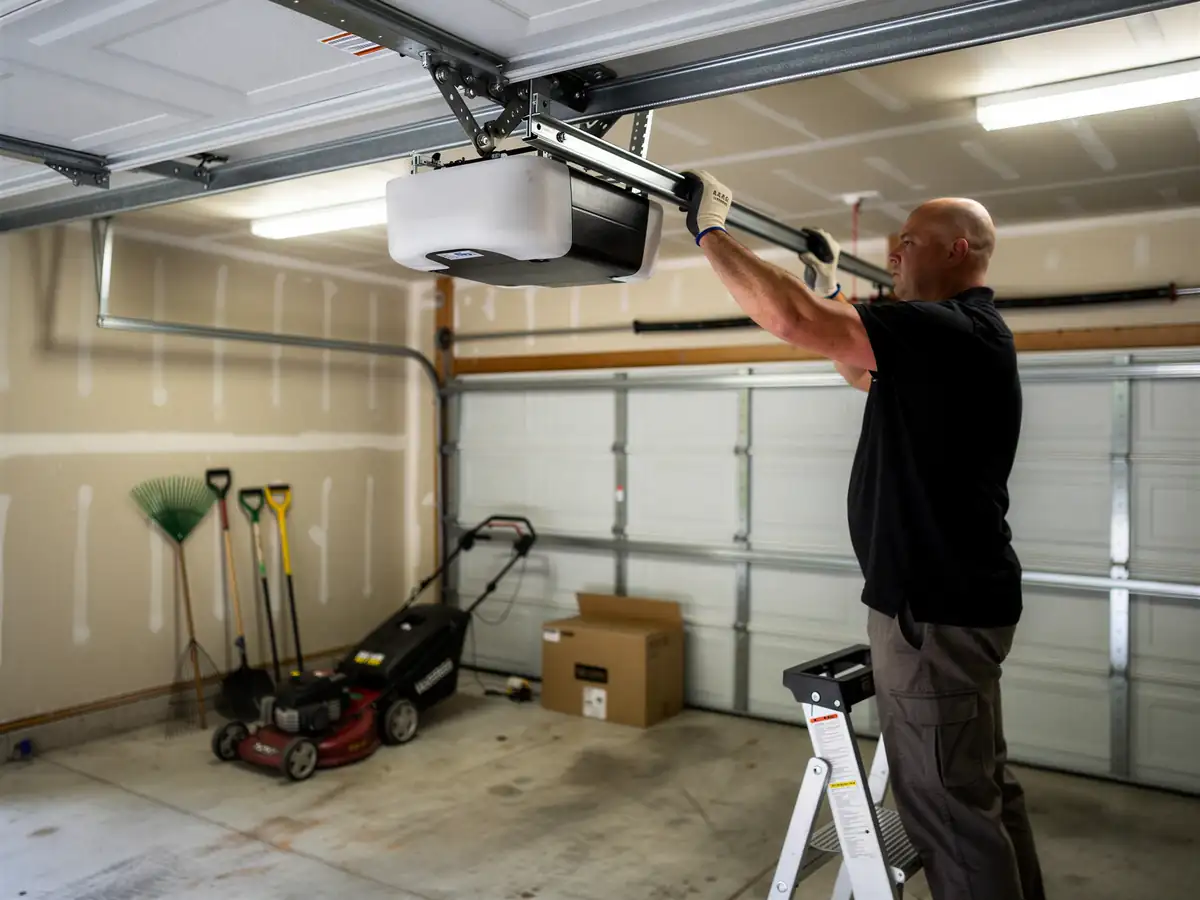
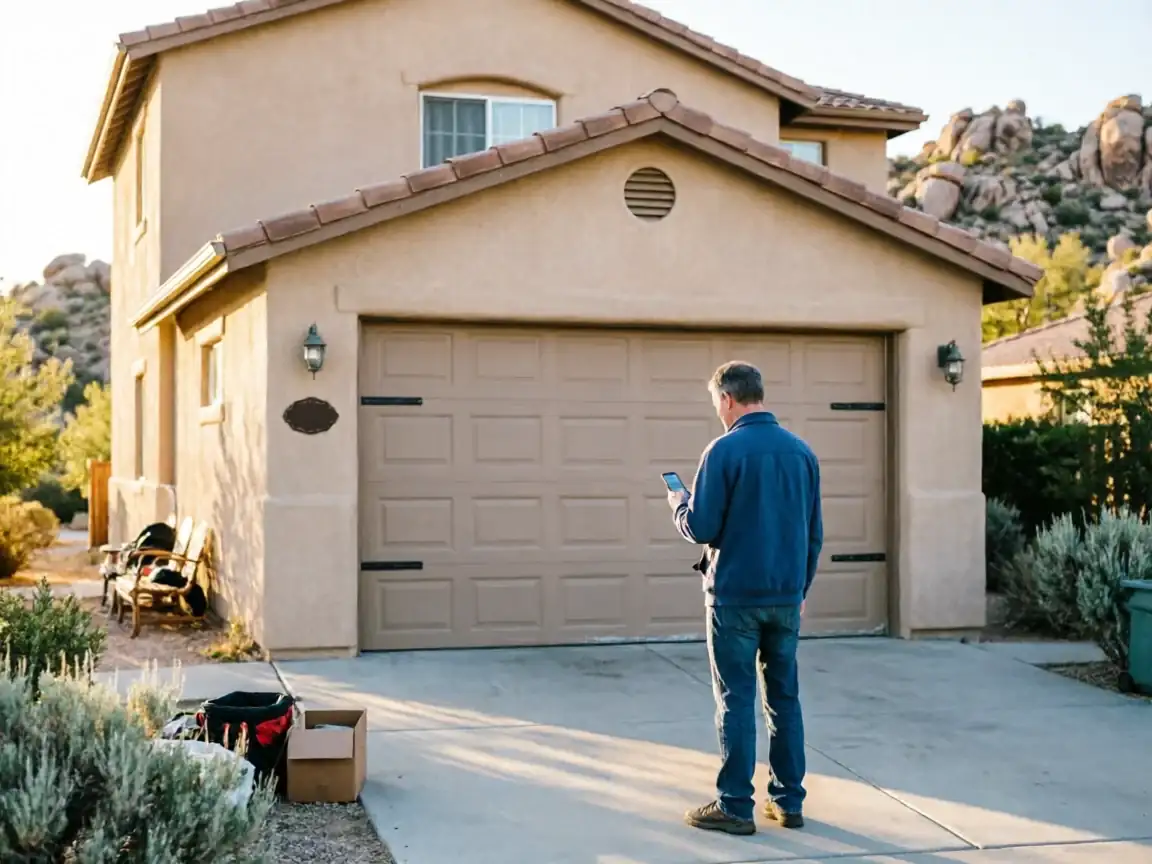
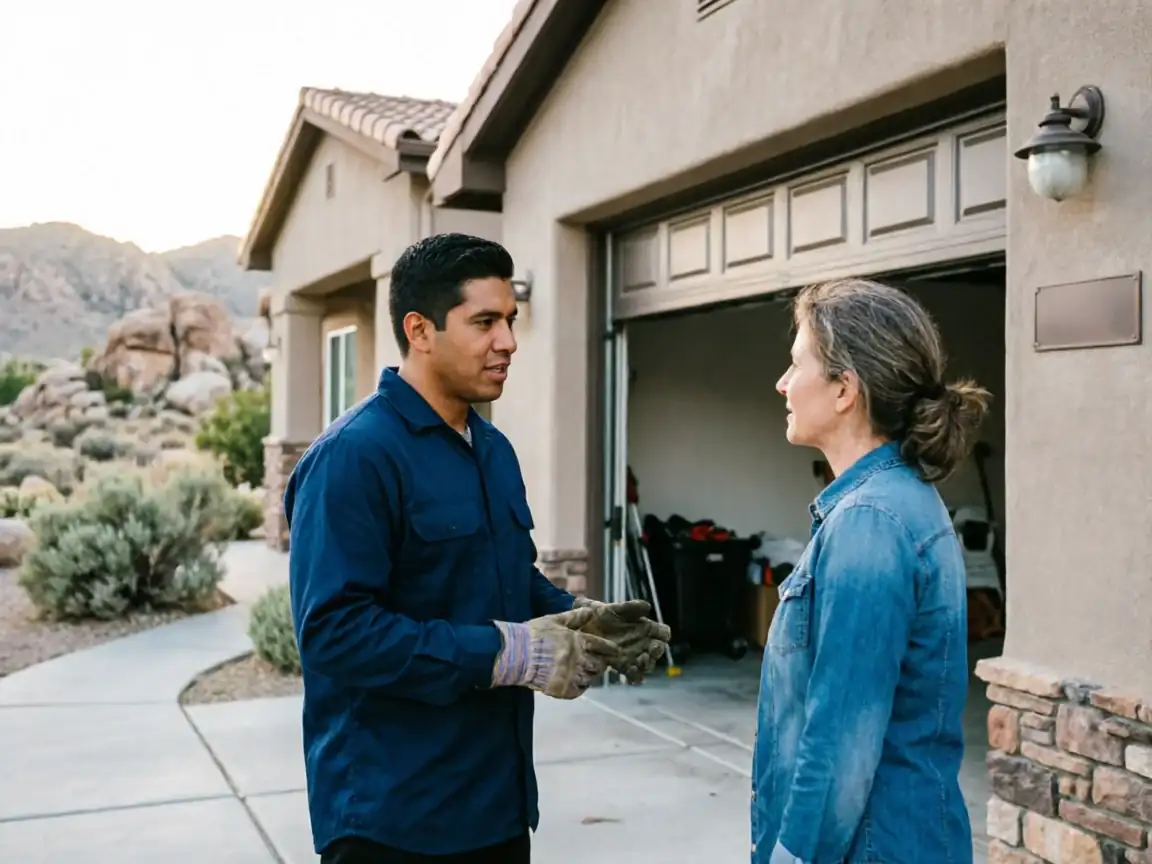
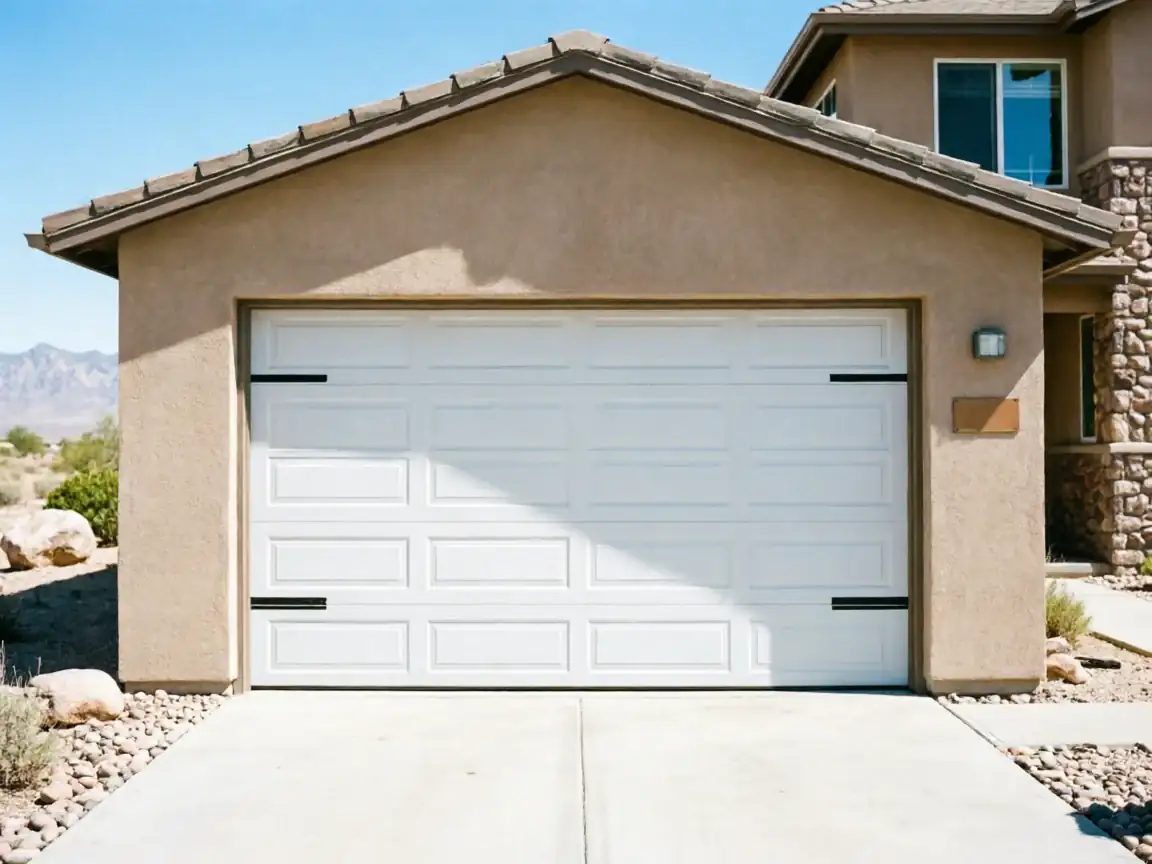
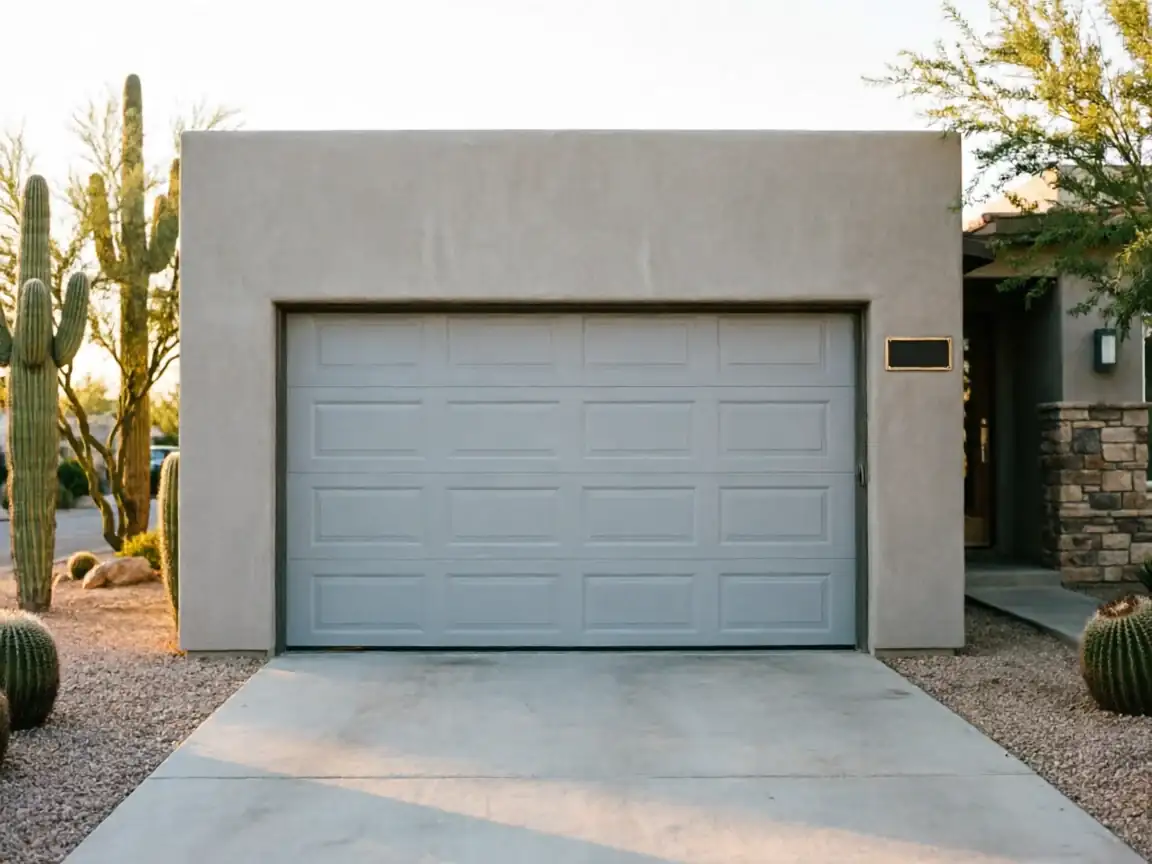
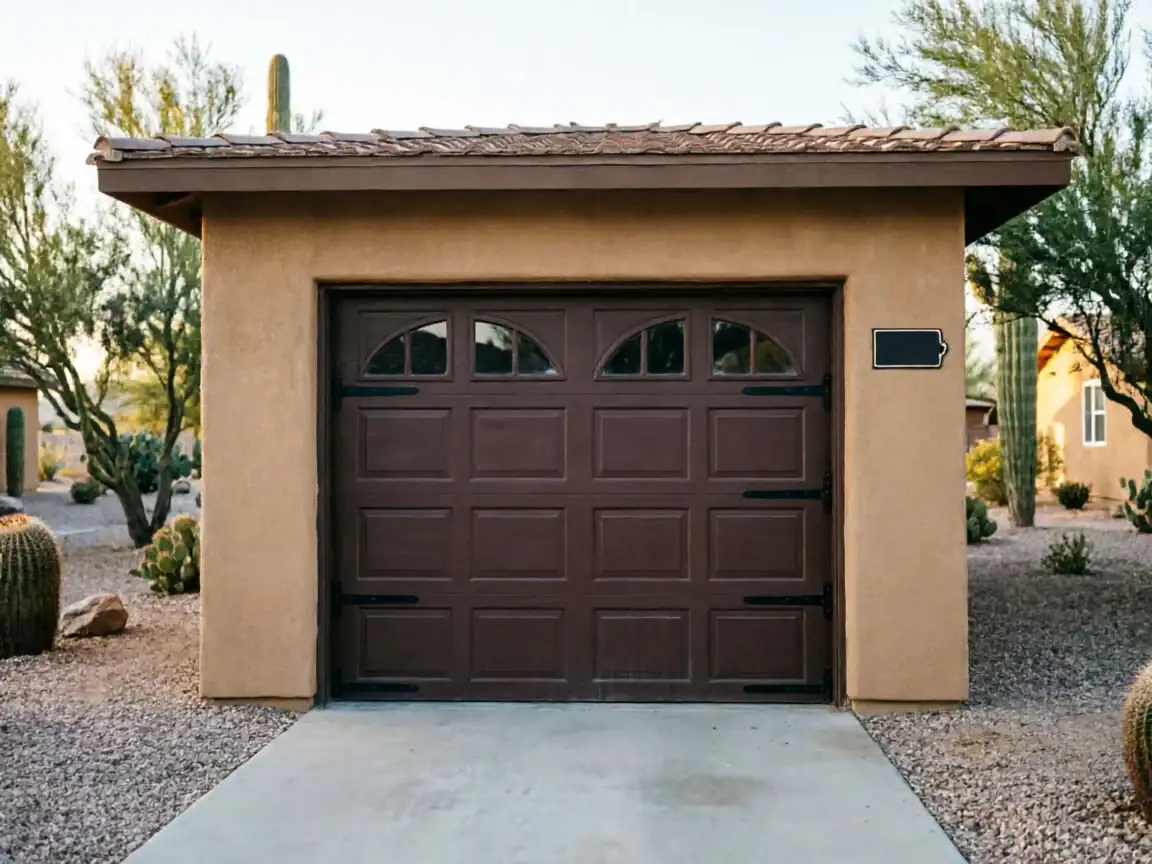
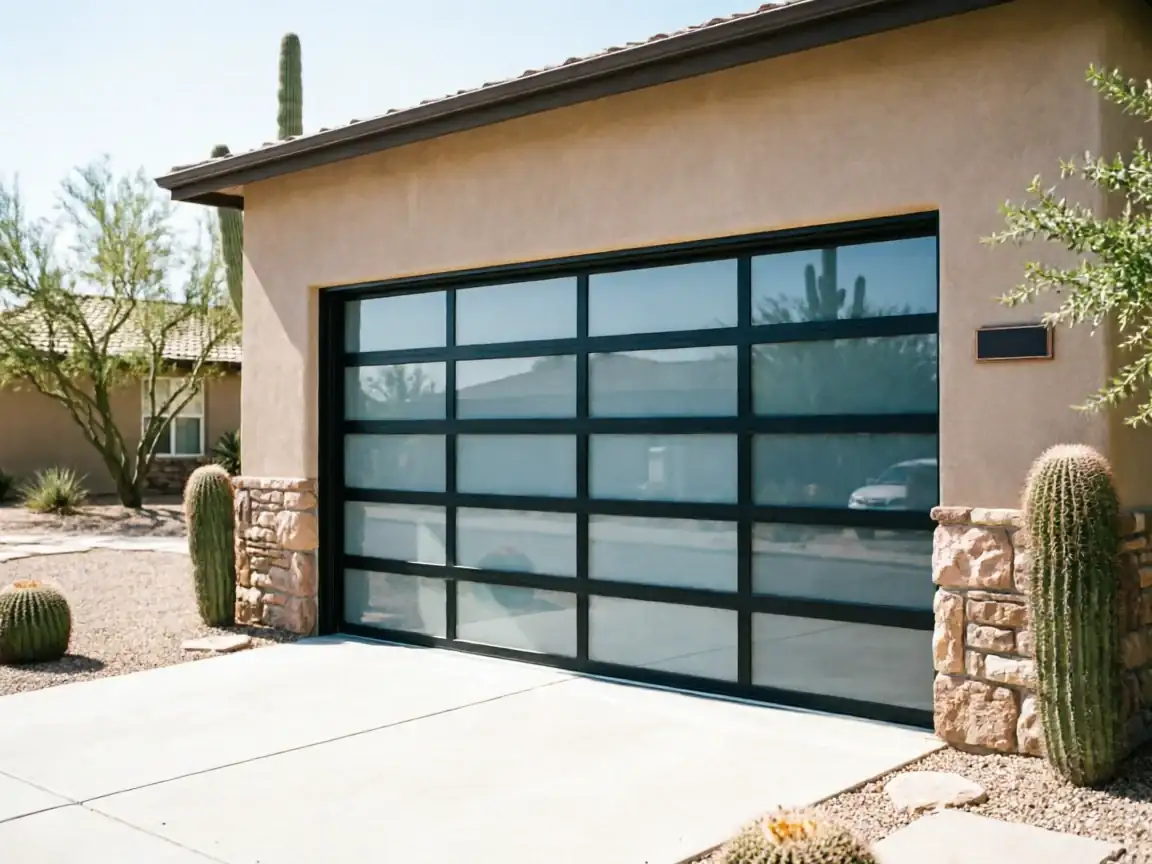
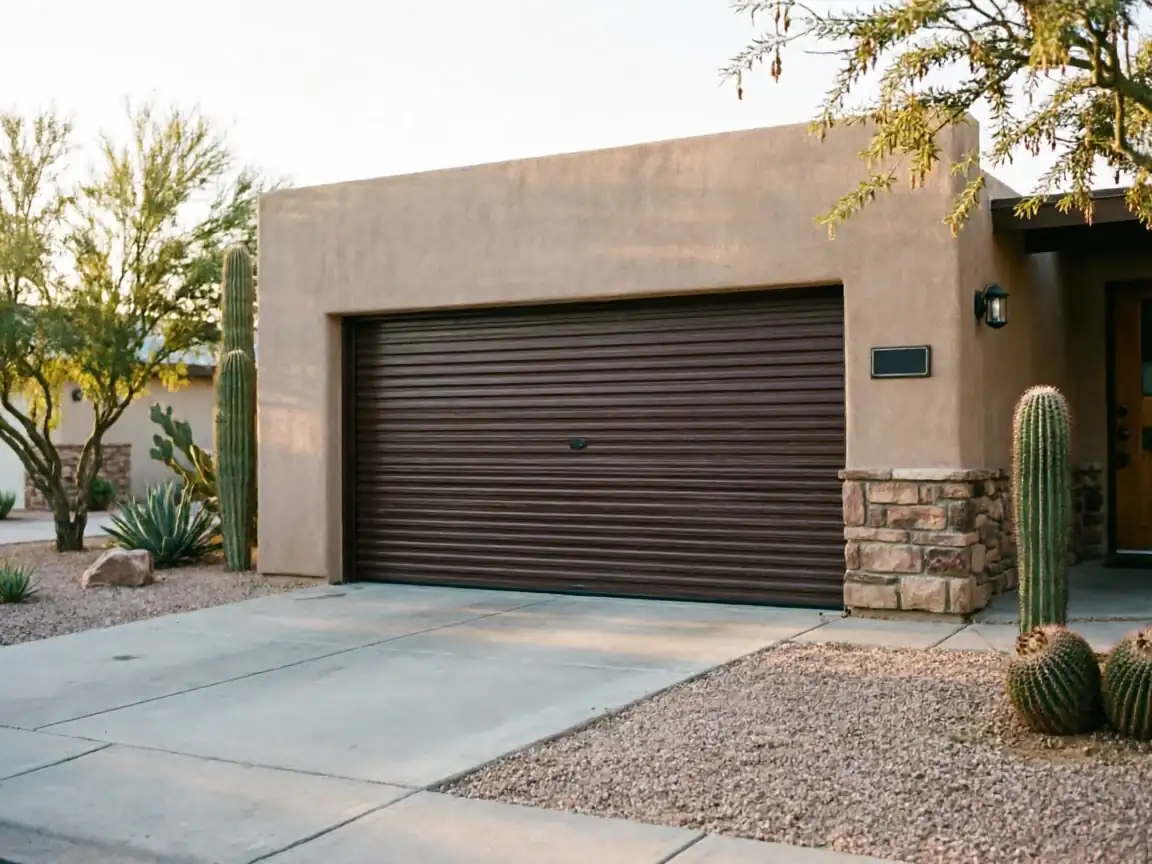
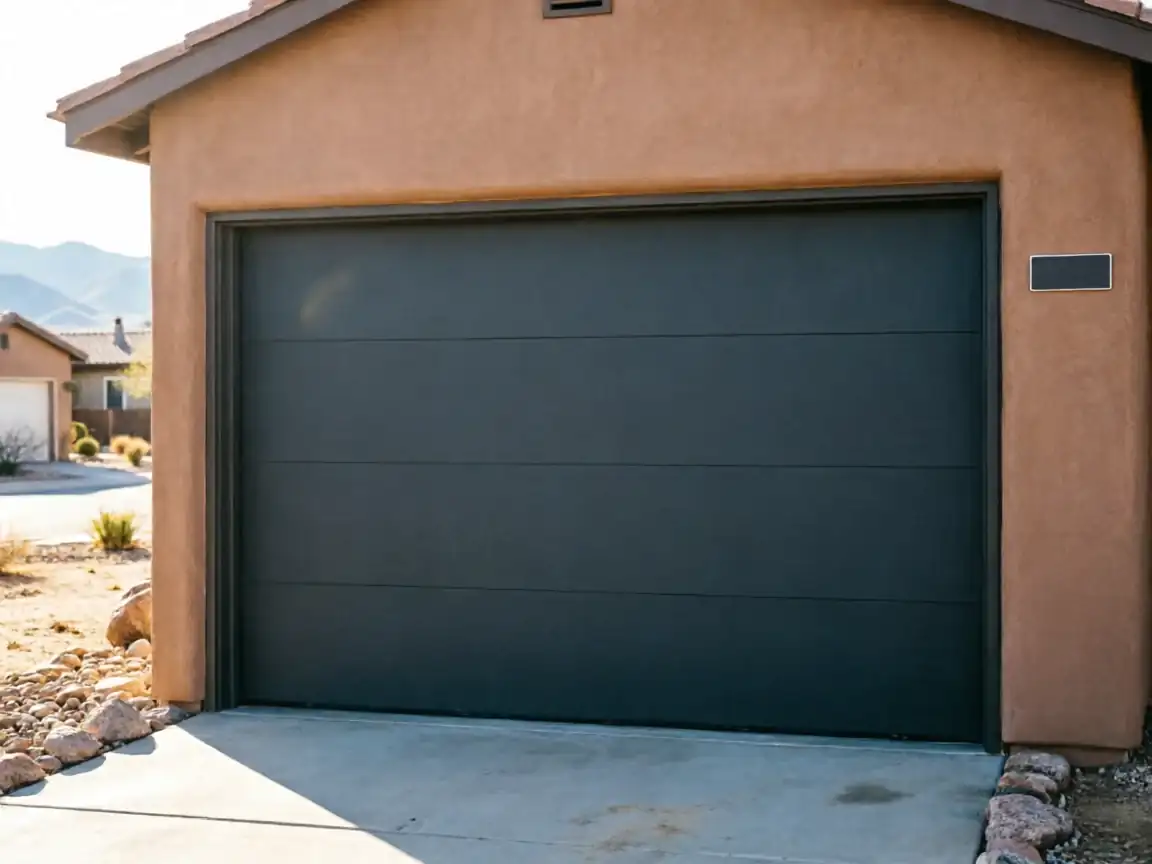
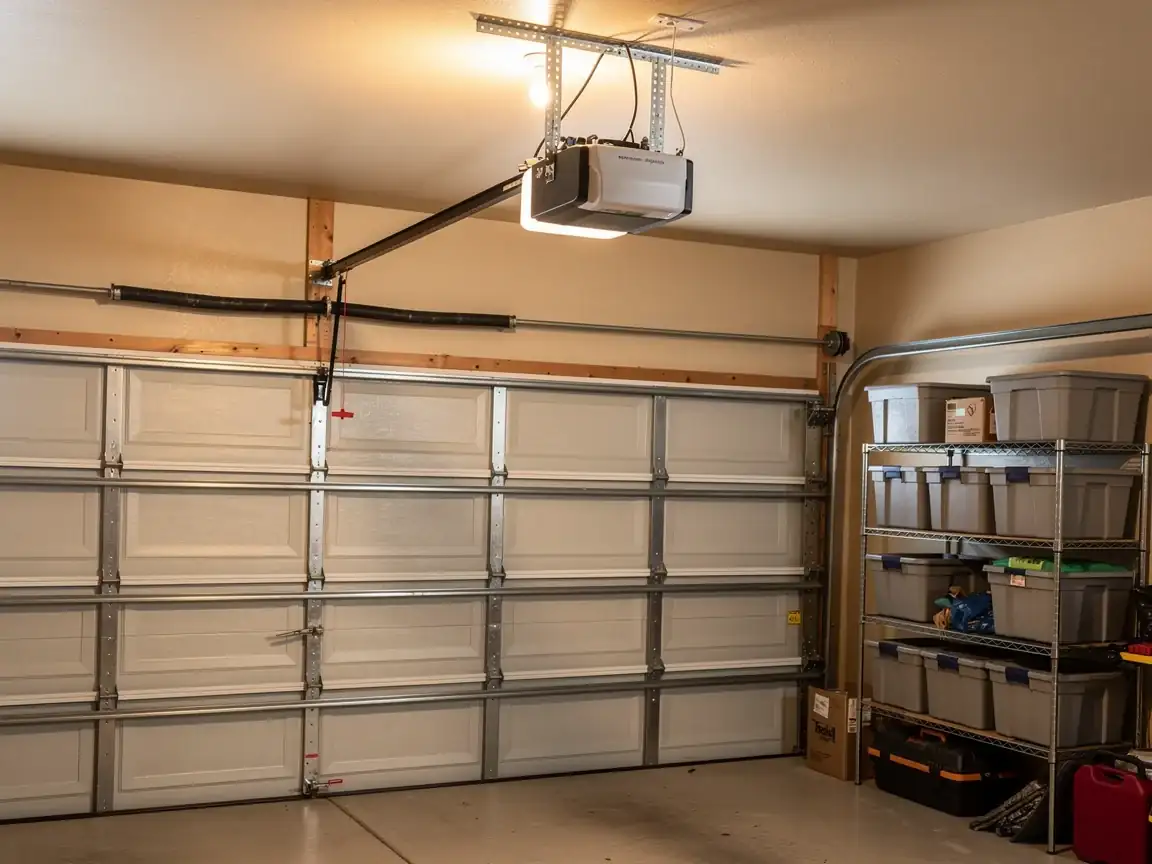
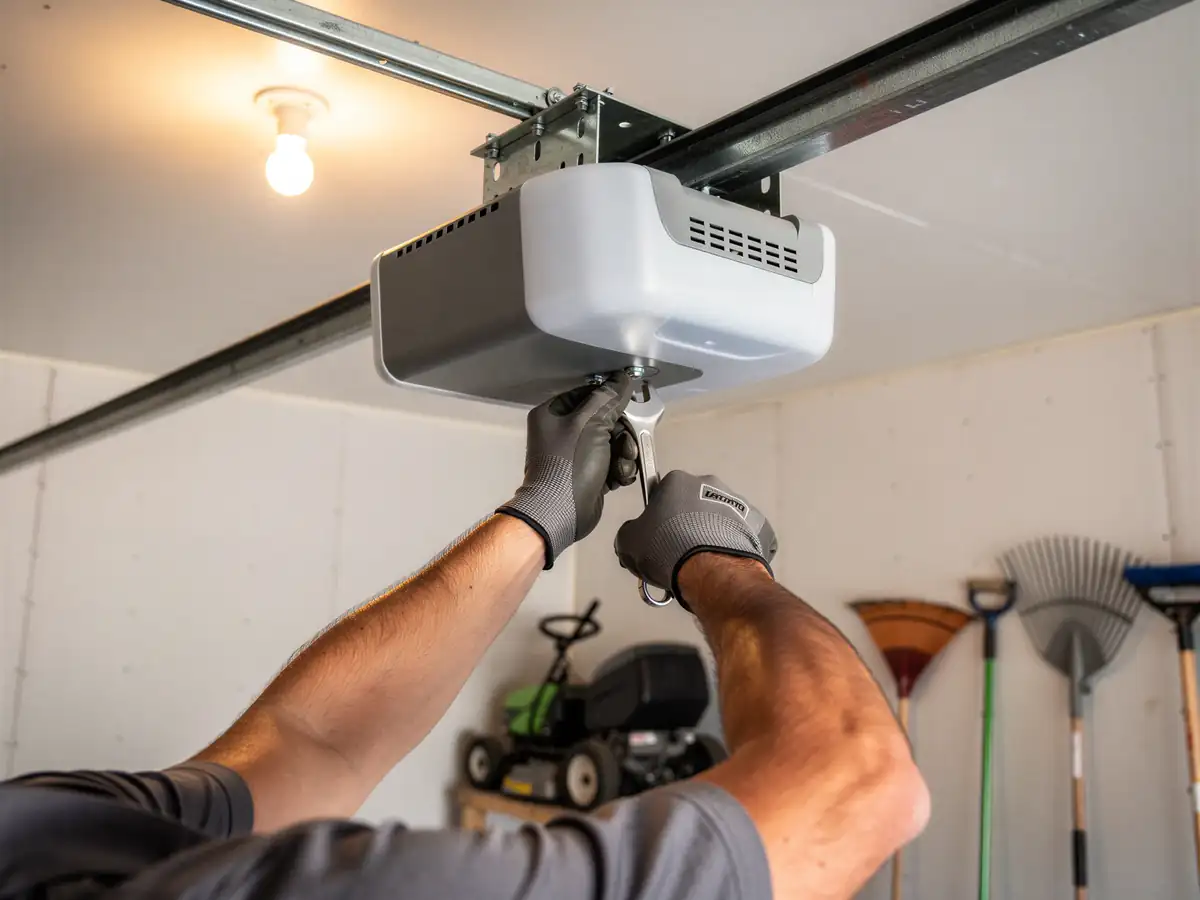
Most of the housing in this service area went up between 1980 and 2007, with a median build year around 1995, spread across seven named pockets from older infill to newer tract subdivisions. That generation of openers and the chain or belt drives installed with them were built for a lot less heat exposure than they actually get out here. The climate band covering Marana and the surrounding communities runs severe on heat, and that matters more for openers than most homeowners expect. The circuit board, the capacitor, and the gear-and-sprocket assembly inside a standard opener head unit all sit a few feet below a garage ceiling that can hold triple-digit air for months at a stretch. Heat breaks down the lubricant in the drive gear, dries out belt tension, and shortens the working life of the logic board years before the motor itself gives out. In a house built in the 1980s or 90s, that opener has already outlived its rated service life once or twice over, and whatever's failing now is probably not the first thing that's gone wrong with it. Newer builds in the same stock range aren't exempt either - a 2005 build with the original opener is running 1980s-grade duty-cycle expectations against 2020s summer temperatures. The fault pattern shows up the same way whether the house sits in an older pocket or a newer one: components rated for moderate heat, asked to run through months of severe heat every year.
What You Are Seeing
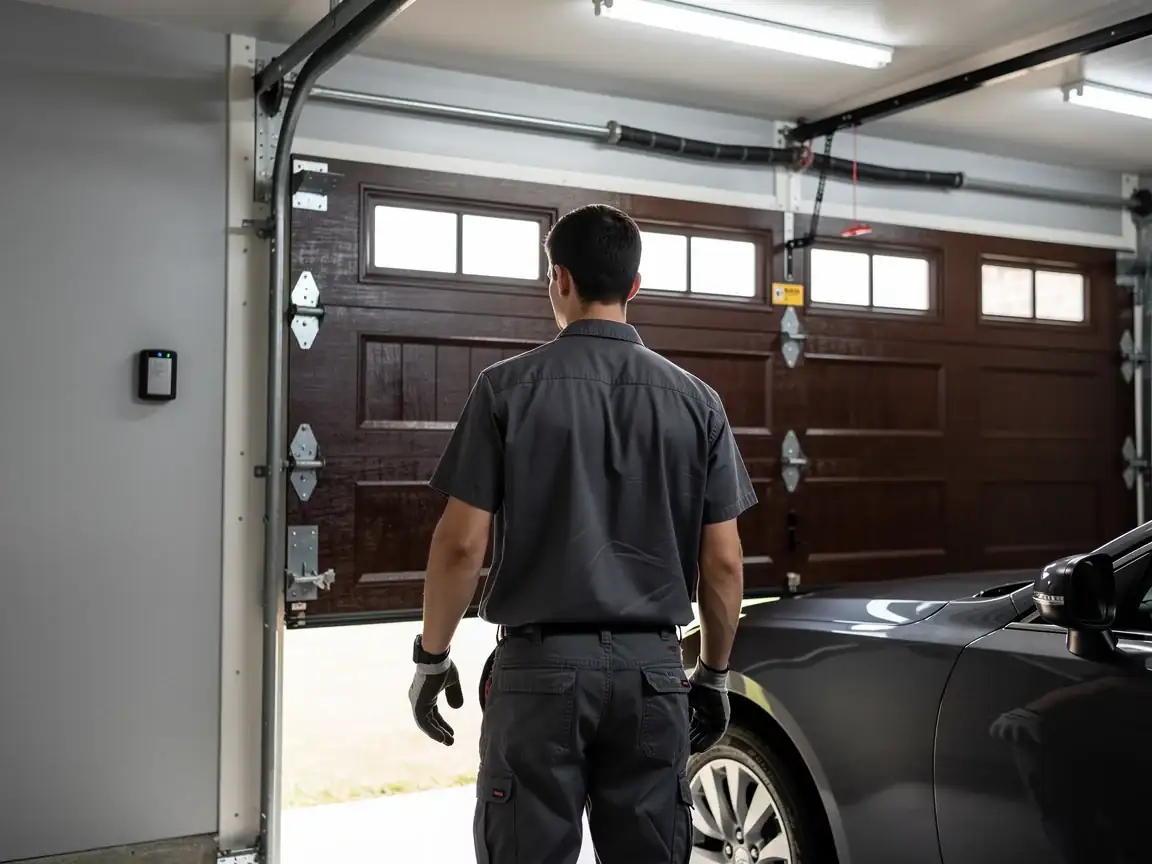
The most common complaint is a door that reverses before it touches the floor, or an opener that runs the motor but the door doesn't move. Both point at the drive mechanism - a stripped gear, a belt that's slipped off its track, or a chain that's jumped teeth. A close second is a unit that simply won't respond to the remote or the wall button at all, which is usually the logic board or a failed capacitor, not the motor. You'll also see openers that work fine in the cool months and start acting up as the garage heats up through late spring, which is heat-driven board failure showing itself as the ambient temperature climbs. Grinding or clicking with no door movement almost always means the gear and sprocket assembly has stripped teeth - common on units that have been running past the age where that part should've been replaced already, given the age of housing stock typical in this area. A door that opens but won't close on its own, or that needs the button held down, points at the safety sensor circuit, not the motor itself, and that's worth ruling out before assuming the whole opener needs replacing.
What You Pay
Opener repair cost depends on what's actually wrong - a sensor realignment is a different job than a stripped drive gear, and a failed logic board is a different job than either. We don't quote a number sight unseen, because doing that means either overcharging the easy fix or undercharging the hard one, and neither is fair to you. What we can tell you is what drives the cost: whether the fault is the motor head unit, the drive mechanism, or the wiring and sensors, and whether the part is something we carry on the truck or something that has to be ordered. Given the age of opener units still running in houses built through the 1980s-2007 window across this service area, replacement parts for older chain-drive models are sometimes harder to source than parts for anything installed in the last decade. That can shift the math toward replacing the opener instead of repairing it, and we'll tell you straight when that's the better move rather than billing you for a patch that won't hold.
Can You Do This Yourself
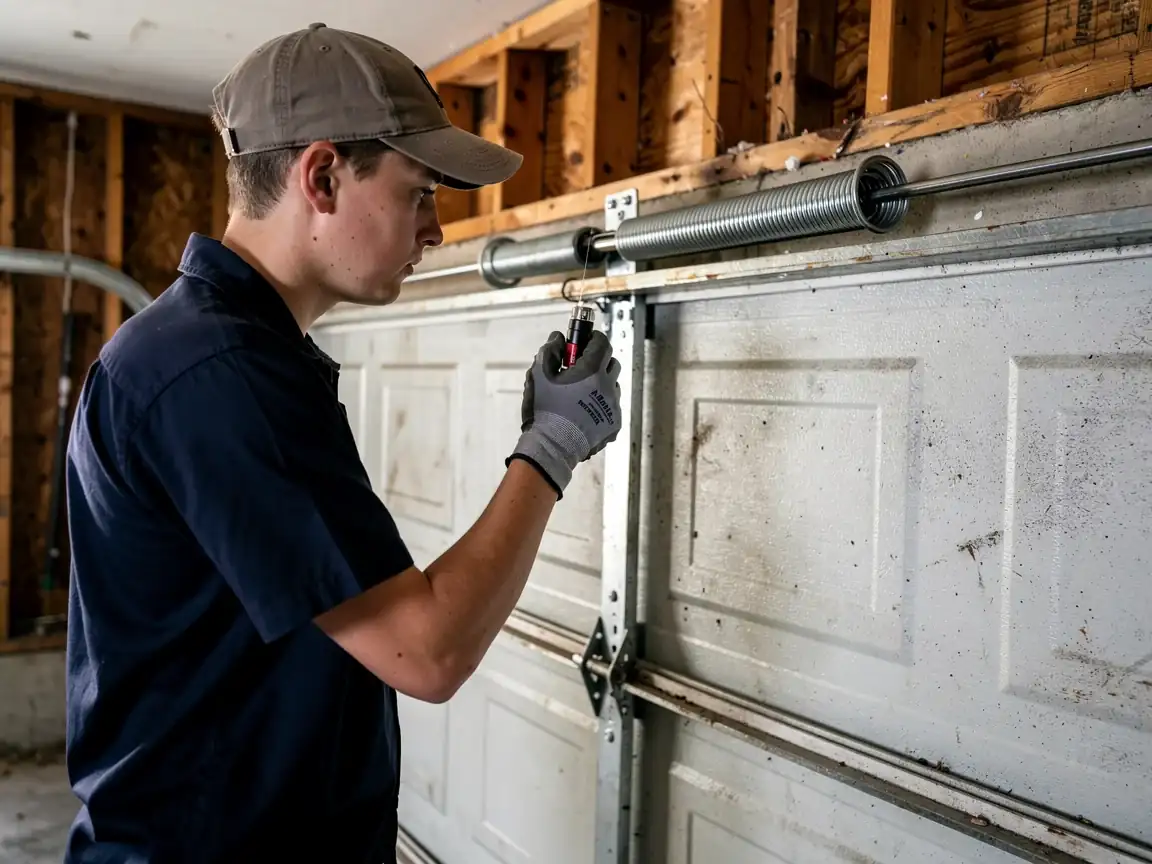
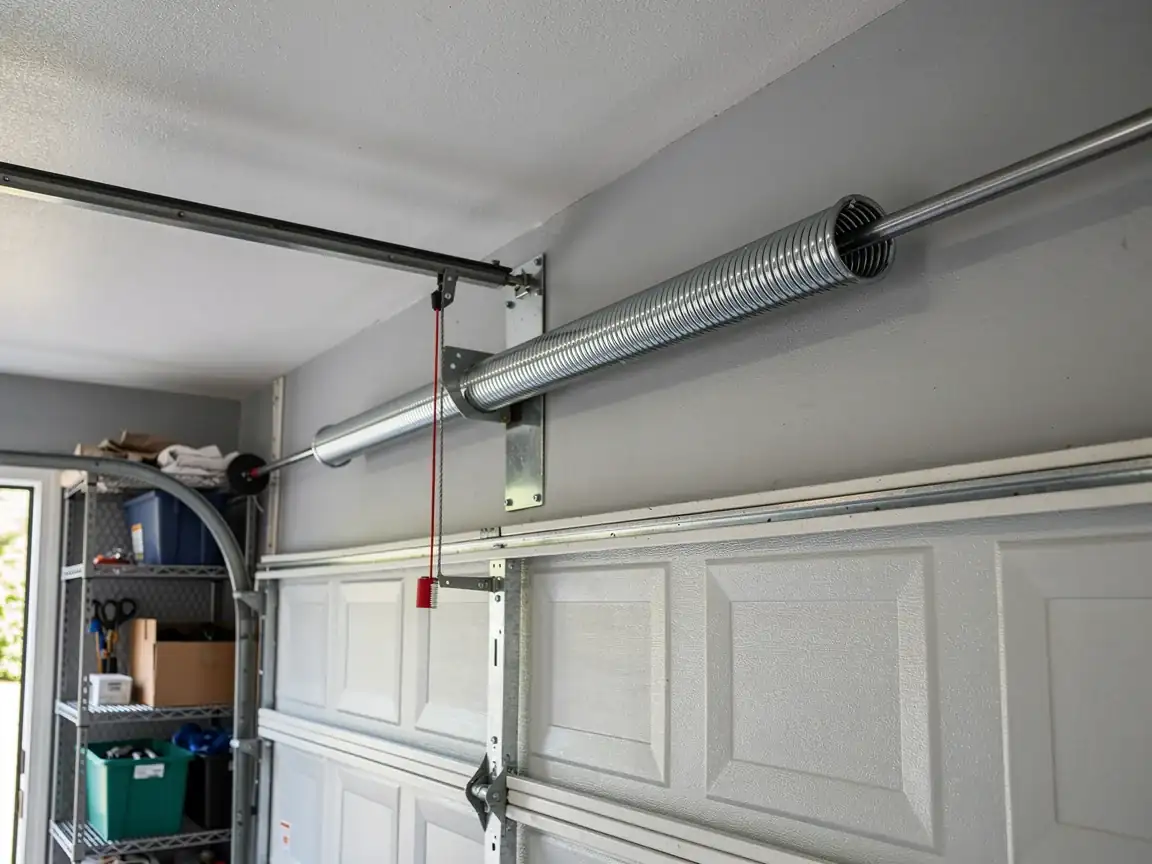
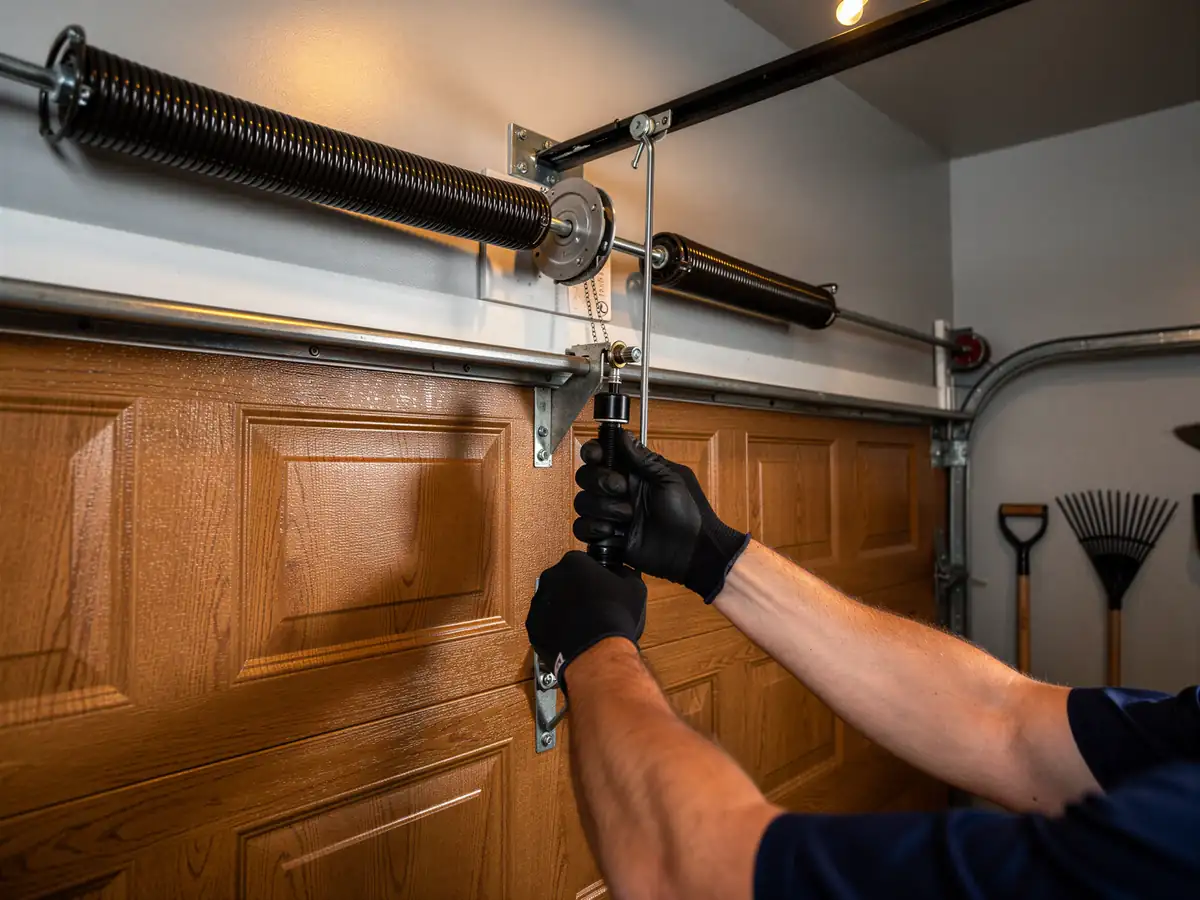
Realigning a safety sensor or tightening a loose chain is within reach for a homeowner with basic tools and some patience - unplug the unit first, and don't skip that step. Replacing a logic board, a capacitor, or the gear-and-sprocket assembly inside the motor head is a different matter. The housing is live when powered, the spring-loaded torsion system on the door itself carries real stored force, and guessing wrong on either can cost you a trip to urgent care, not just a wasted afternoon. Our honest limitation here: if the opener motor itself has failed and the unit is old enough that parts are back-ordered, we're not going to pretend we can get it running again by end of day. Sometimes the right call is a new opener rather than chasing parts for one that was already near the end of its service life. If you're not sure which kind of problem you're looking at, a phone description of the symptom usually tells us enough to know whether it's a ten-minute fix or a motor replacement before we even drive out.
How it works
From “it’s stuck” to “it’s fixed”
01
Tell us what’s wrong
Describe the symptom - won’t open, loud bang, opener runs but the door won’t move.
02
On-site diagnosis
A technician tests the door under power and by hand and finds what actually failed.
03
Clear, up-front plan
You get the fix that’s needed and what drives the cost - before any work starts.
04
Repaired & tested
The repair is done, the door is set true and tested, and the work area left clean.
Not sure which repair your door needs in Marana, AZ? Describe what it’s doing - every job starts with a diagnosis.
Why do garage door openers seem to fail more in summer here?
Heat is hard on the capacitor and logic board inside the opener motor, and the service area sits in a severe heat climate band. A board that's been degrading quietly for a year or two often picks the hottest stretch of summer to actually quit, which makes it look like heat caused the failure when it really just finished it off.
Is my opener too old to repair?
Depends on the part that's failed. Housing stock across this service area mostly dates 1980 to 2007, so a lot of original or first-replacement openers are well past normal service life. If the failed part is still available, repair makes sense. If it's a back-ordered part on an older chain-drive unit, replacement is usually the better money.
Can I just replace the opener myself?
You can, but the motor head wiring and the door's torsion spring system both carry risks that aren't worth cutting corners on. We'd rather you call and describe the symptom than end up mid-install on a ladder with a live circuit and a door that isn't behaving.
Ready to get your garage door sorted?
Tell us what it’s doing and where you are in Marana - we’ll take it from there.