Cracked, worn nylon rollers are common on Marana's 1980s-2007 housing stock after years of desert heat. Here's why it happens and what replacement involves.
Most of the garage doors we look at in this area were installed when the house was built, somewhere between 1980 and 2007, with a heavy concentration of stock from the 1980s and 90s. That matters for rollers because builders in that era almost universally spec'd plain nylon rollers with stamped steel stems - cheap, fine for the climate they were tested in, not built for a region where the heat band is rated severe. Nylon gets brittle under sustained high heat. It doesn't fail all at once; it dries out, shrinks slightly, and starts chipping at the edges where it rides the track. A door that's 25 to 40 years old, sitting in a garage that regularly tops 110 degrees in summer, has had thousands of heat-cool cycles working against the roller material specifically, not just the springs or the opener. That's why roller wear shows up here as a distinct, predictable failure rather than a random one. We see it across the service area regardless of which subdivision a house sits in, because the housing age and the climate are the two things driving it, not the neighborhood.
What You Are Seeing
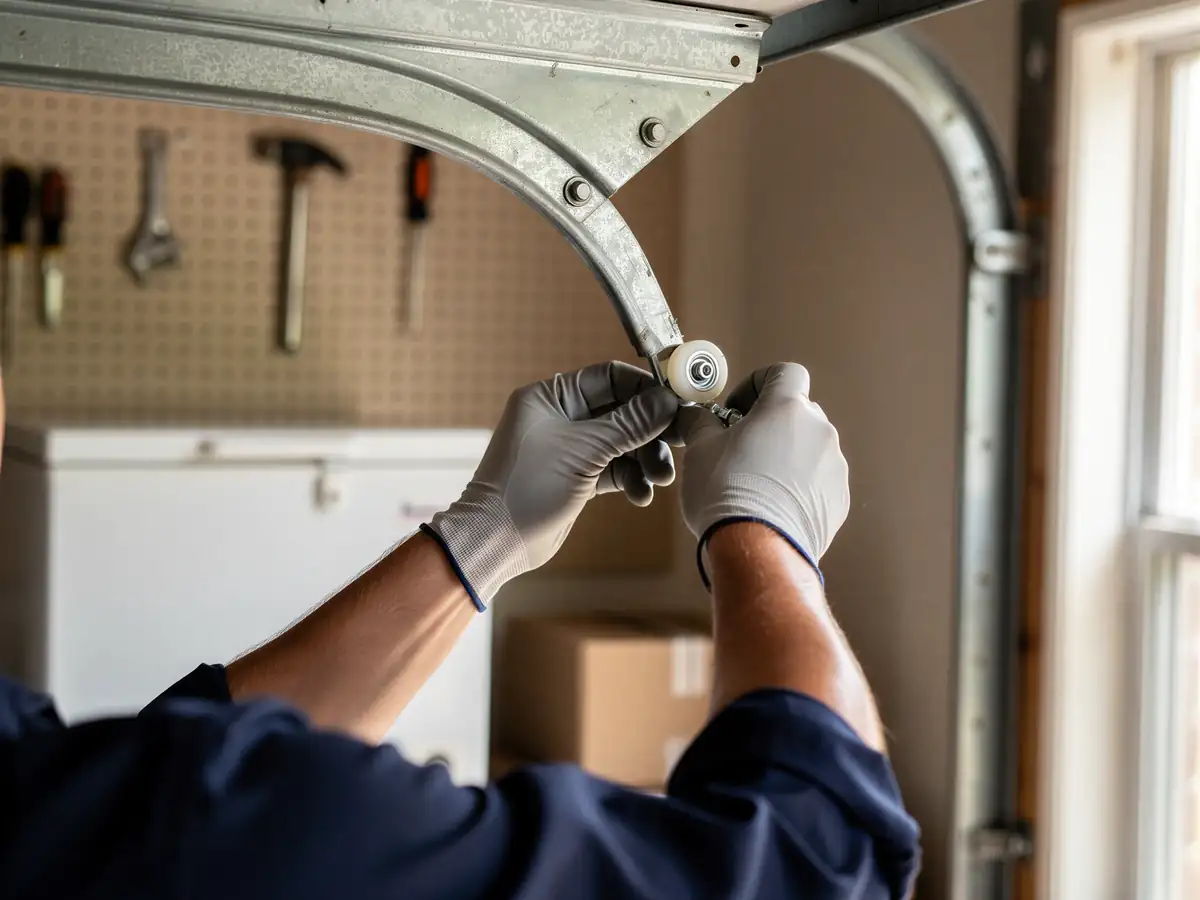
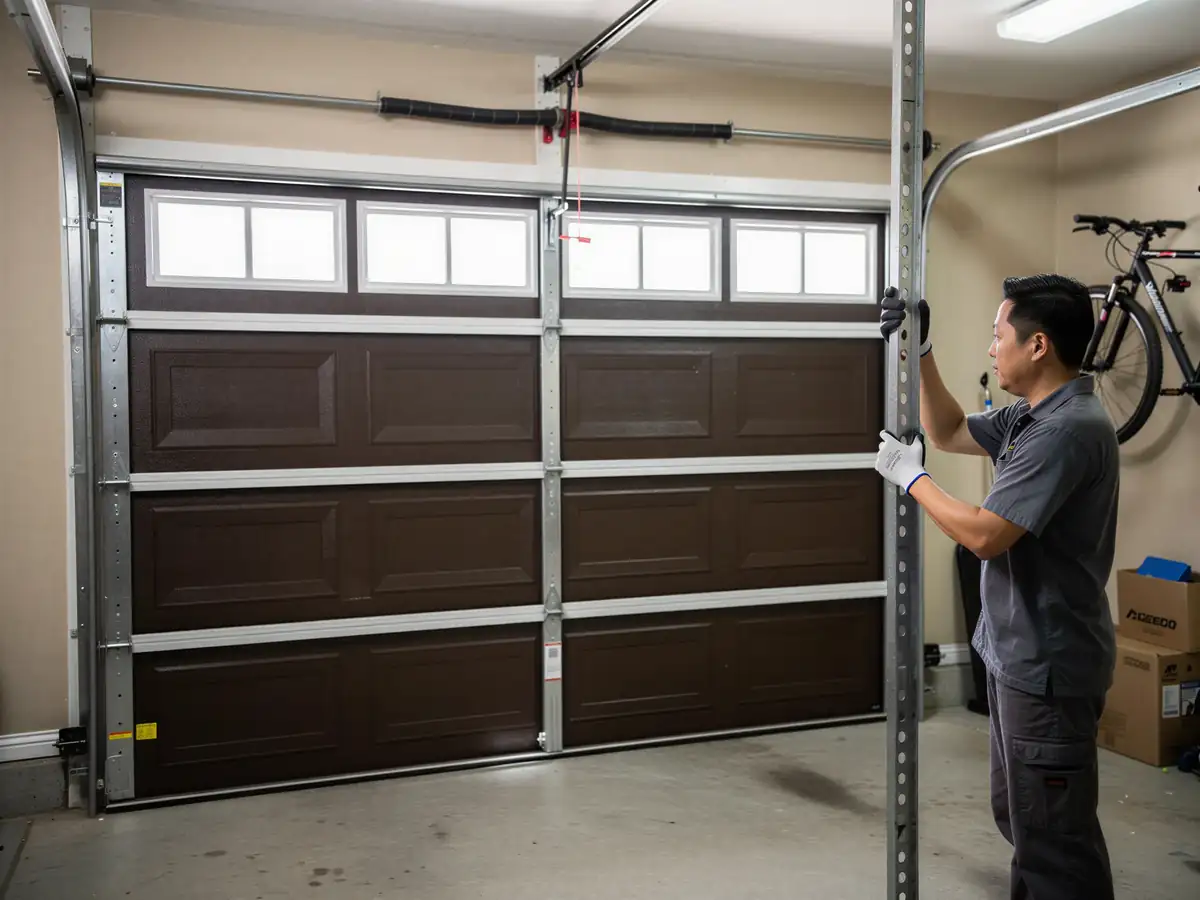
The early sign is almost always sound before it's motion: a grinding or clicking as the door travels, louder on the top and bottom sections where the rollers carry more load. Look closely at the roller wheel itself where it meets the track - chipped edges, a flat spot worn into one side, or a wheel that's visibly smaller than its neighbors are all signs the nylon has degraded rather than just gotten dirty. Steel stems can also bend if a roller seized and the door kept forcing it through the track, which is a different and more urgent problem than the wheel itself. If the door is binding, jerking at one point in its travel, or popping slightly off the track on one side, that's usually a roller that's failed enough to let the panel ride unevenly. None of this is a spring problem and none of it is an opener problem, even though it can feel like both from inside the house. The honest caveat: by the time you can hear it from the kitchen, the roller has likely been degrading for a while, and a couple of them failing usually means the rest aren't far behind.
What You Pay
We don't have a flat number to put here that would mean anything - roller jobs vary by how many wheels need replacing, whether the stems or hinges are also worn, and whether it's a 7-foot single door or a 16-foot double with twice the roller count. What we can tell you is what drives the cost up or down on a typical call: full-set replacement versus patching the two or three worst wheels, nylon versus sealed-bearing steel rollers, and whether the track itself needs adjustment once new rollers go in, which it often does after years of a door riding crooked. A straightforward roller swap on a standard residential door is one of the less expensive repairs we do compared to spring or opener work, mainly because it doesn't involve high-tension components. We'll give you the actual number for your door once we've seen it, not before.
Can You Do This Yourself
Rollers are one of the more DIY-friendly garage door repairs, and we'll say that plainly: if the door is disconnected from the opener, the springs are intact, and you're only swapping worn wheels one at a time while the door stays supported, a careful homeowner can do this safely. The risk comes in two places. First, bottom rollers sit near the cables and bottom brackets, which are under spring tension even when the door looks still - don't loosen a bottom bracket bolt all the way without understanding what's holding the cable. Second, if you pull more than one roller at a time on a heavier double door, the section can shift and bind in the track, which turns a simple job into a stuck door. If you've already got chipped nylon, bent stems, and a track that looks like it's been forced, that combination is past the point where doing it yourself saves you money - call it in instead. You can reach us through our site at /.
How it works
From “it’s stuck” to “it’s fixed”
01
Tell us what’s wrong
Describe the symptom - won’t open, loud bang, opener runs but the door won’t move.
02
On-site diagnosis
A technician tests the door under power and by hand and finds what actually failed.
03
Clear, up-front plan
You get the fix that’s needed and what drives the cost - before any work starts.
04
Repaired & tested
The repair is done, the door is set true and tested, and the work area left clean.
Not sure which repair your door needs in Marana, AZ? Describe what it’s doing - every job starts with a diagnosis.
How often do garage door rollers need replacing in Marana?
There's no fixed schedule, but given how much of the local housing is from the 1980s through the mid-2000s and the severe summer heat here, original nylon rollers commonly show wear well before other door components do. If your door is original to a house from that era and you're hearing new grinding noises, the rollers are a reasonable first thing to check.
Can I replace just the worst rollers instead of the whole set?
Yes, and it's common to do exactly that - replace the two or three visibly chipped or flat-spotted wheels rather than the full set of ten. The trade-off is that the remaining original rollers are the same age and exposed to the same heat, so they tend to follow a year or two later.
Are steel rollers better than nylon in this climate?
Sealed-bearing steel rollers hold up better to sustained heat than plain nylon, which is why we see fewer heat-related failures on doors that have already been upgraded. They cost more up front and run slightly louder than nylon, which is the trade-off worth knowing before you choose.
Do you serve areas outside Marana itself?
We cover the surrounding service area, including communities out toward Picture Rocks, Avra Valley, Catalina, Red Rock, Saddlebrooke, Tucson Estates, Dove Mountain.
Ready to get your garage door sorted?
Tell us what it’s doing and where you are in Marana - we’ll take it from there.